The first decision in any mosaic is not the design. It is the material. Marble and glass behave very differently in light, in water and underfoot, and choosing the right one for a space matters as much as the image itself. This is how we help clients decide.
Natural marble
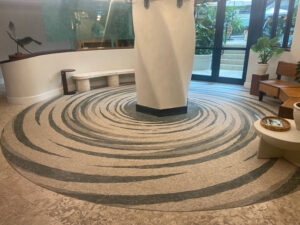
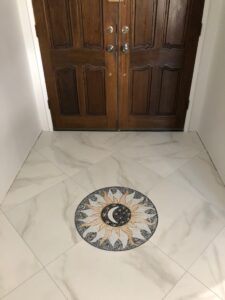
Marble is the material of ancient floors and still the heart of our workshop. Each piece is cut from natural stone, so no two tesserae are exactly alike, and the surface has a soft, matte depth that suits classical and figurative designs.
- Palette: natural, earthy tones such as whites, creams, ochres, reds, greens and greys. Colours are subtle rather than bright.
- Best for: floors, entryways, fireplaces, feature walls and Roman or Greco-Roman designs.
- Care: marble is porous, so it is sealed after installation and resealed from time to time, especially on floors and in wet areas.
Glass
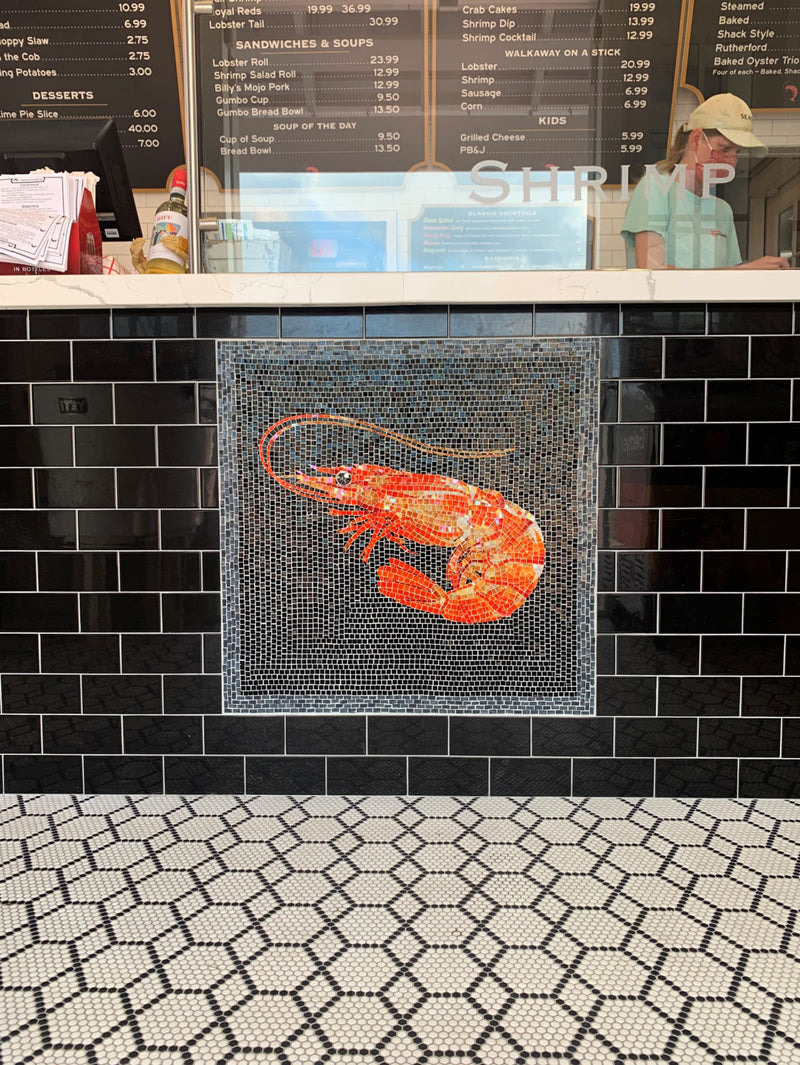
Glass tesserae offer colour that stone cannot: deep blues, vivid greens, pure reds and reflective surfaces that catch the light. Gold and silver glass, made with metal leaf fused between layers, is what gives Byzantine icons their glow.
- Palette: saturated and bright, with a much wider range of strong colours than stone.
- Best for: pools, showers, fountains, sea and nature scenes, religious icons and modern designs.
- Care: glass is non-porous, so it does not need sealing and handles constant water well.
How to choose
A few simple questions usually settle it:
- Will it get wet? For pools and showers, glass is usually the first choice.
- Will people walk on it? For floors, marble’s matte surface is more comfortable and less slippery underfoot.
- What is the mood? Classical, calm and warm points to marble; bold, bright and luminous points to glass.
- Where does the light come from? Glass and gold come alive in direct or changing light; marble rewards soft, even light.
Indoors or outdoors
Climate matters as much as style. Outdoors, a mosaic faces sun, rain and, in many places, frost. Water that gets into a porous material and then freezes can slowly damage it, so for exposed outdoor pieces in cold climates, the choice of stone, the sealing and the installation all need extra care. Glass is non-porous and copes well with water, which is why it is so common in pools and fountains. Marble can also be used outdoors, and has been for two thousand years, provided it is suitable for the climate, properly sealed and properly installed. If your piece is going outside, tell us where you live and we will advise on the best material.
How colour behaves in each
Marble colours are natural and subtle, so a design in marble relies on contrast between light and dark rather than on bright hues. That is why classical mosaics often use a pale background with darker outlines, and why marble portraits look so lifelike: the soft shading suits skin, fabric and stone. Glass, on the other hand, can produce strong, pure colour. A glass sea can move through a dozen blues; a glass flower can be truly red. The trade-off is that glass shows every change in light, which is wonderful on a sunlit wall and can feel busy under strong artificial lighting.
Detail and size
Both materials can be cut finely, but the effect is different. Fine marble work has a painterly softness; fine glass work has a jewel-like sharpness. For a very small, highly detailed piece, both can work, so the choice usually comes down to the look you want. For a large floor or wall, marble’s calmer surface often sits more comfortably in a room, while glass can turn a feature wall or pool into the focal point of the space.
A quick comparison
- Look: marble is matte, natural and soft; glass is bright, saturated and reflective.
- Colour range: marble offers earthy, natural tones; glass offers almost any colour, including metallic gold and silver.
- Water: marble is porous and needs sealing; glass is non-porous and ideal for pools and showers.
- Underfoot: marble is comfortable and traditional for floors; glass is more often used on walls and in water.
- Style: marble suits classical, Roman and figurative work; glass suits icons, sea scenes and modern designs.
Budget and timing can play a part too. Highly detailed work takes longer to cut and set in either material, and the size of the tesserae affects how many pieces a design needs. When you ask for a master sketch, mention any constraints you have, so we can suggest the material and level of detail that gives you the best result within them.
Neither material is better than the other. They are different tools, and the best mosaics use each one where it does its job best.
Combining the two
Many of our pieces use both: a marble field with glass accents for water, eyes, flowers or a gold halo. The contrast between matte stone and bright glass can make a small detail the focal point of the whole design.
To compare colours before you commit, browse the mosaic colour chart, then ask for real samples of the shades that matter most to your design.