A mosaic medallion is one of the simplest ways to give a room a centre. A round or square panel set into a floor, a patio or a wall draws the eye, anchors the furniture and makes an ordinary space feel deliberate. The design gets most of the attention, but the size and placement are what make a medallion look right. Here is how we think about both.
Start with the room, not the design
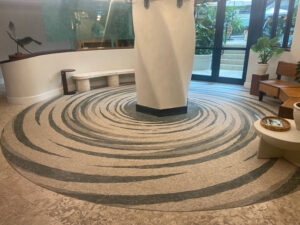
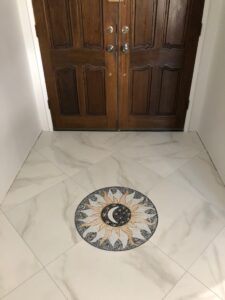
Measure the space and mark where people actually walk and stand. A medallion should sit where it can be seen whole: in the middle of an entrance hall, at the foot of a staircase, in front of a fireplace, or at the centre of a patio. Avoid places where furniture or rugs will cover part of it; a half-hidden medallion looks like a mistake.
Getting the size right
- Leave a margin. A medallion needs plain floor around it. As a starting point, try a diameter of roughly a third to a half of the shorter side of the space, then adjust.
- Mark it out first. Cut a circle of paper or cardboard to the size you are considering and lay it on the floor for a day. Walk around it. It is the quickest way to know whether it is too small or too big.
- Think about the view. Medallions seen from a balcony or staircase can be larger and more detailed than those seen only at eye level.
Aligning with the architecture
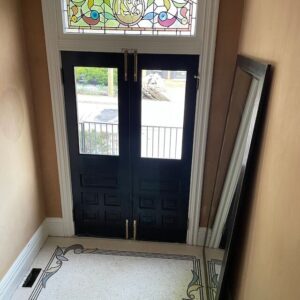
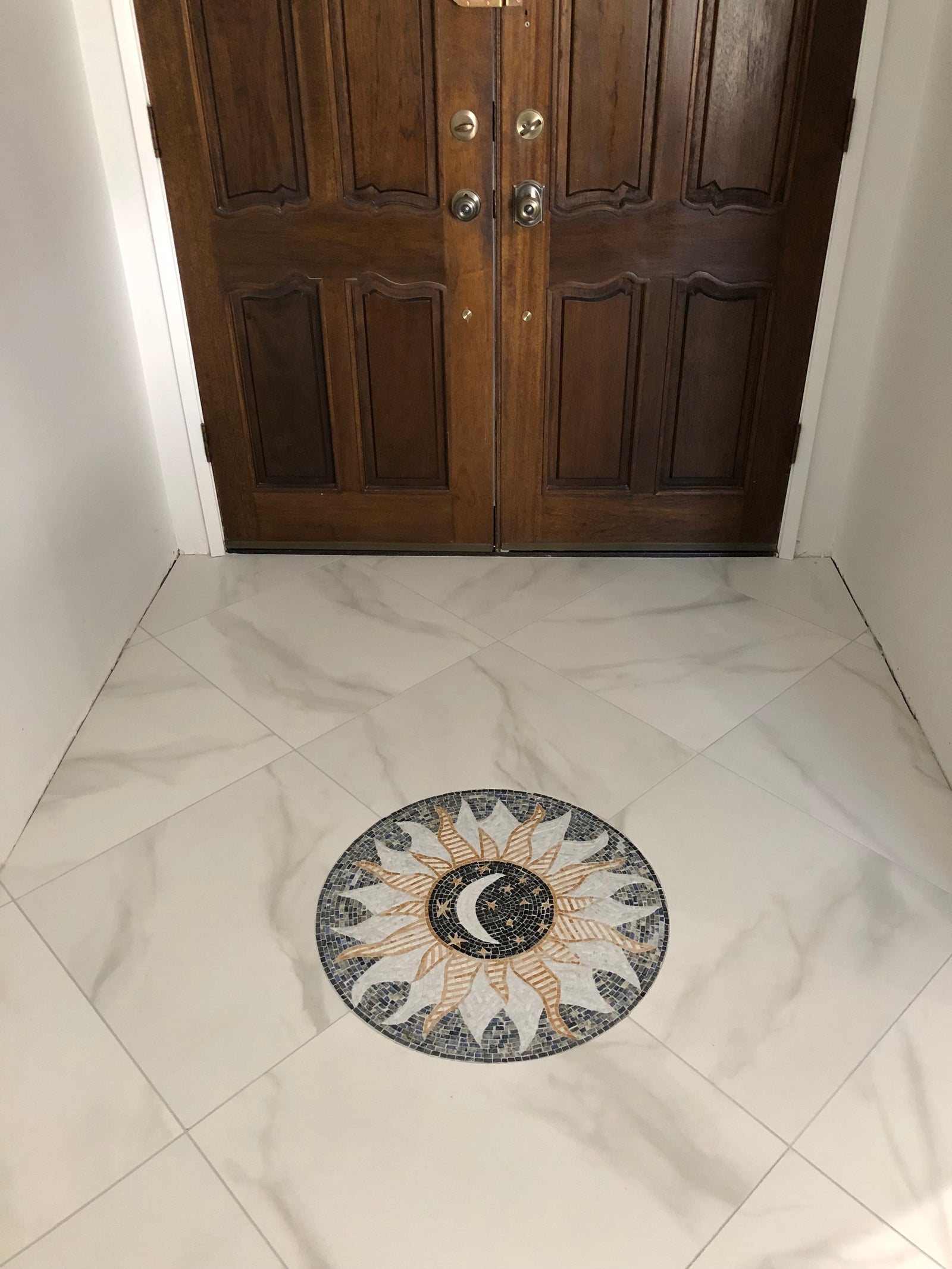
Centre the medallion on something: the front door, a chandelier, a fireplace or the axis of a hallway. If the room is not quite symmetrical, align it to the feature people notice first, usually the door they come in through or the light above.
Compass designs have one more decision: orientation. Some clients set the north point to true north; others align it with the front door so the design reads correctly on entering. Both are right; just decide before installation.
Fitting a medallion into an existing floor
Most medallions are set into a floor of stone, tile or wood. A few practical points make the result look built-in rather than added on:
- Match the thickness. The finished surface of the medallion should sit level with the surrounding floor. Your installer will adjust the adhesive bed or the substrate to make up any difference.
- Plan the cut. Round medallions in a tiled floor need the surrounding tiles cut to a clean curve. A square or octagonal frame of plain border around a round medallion can make this easier and look very elegant.
- Think about the joint. With wooden floors, a narrow border of stone or a metal trim around the medallion allows for the slight movement of the wood.
Medallions on walls and outdoors
Medallions are not only for floors. A round panel above a fireplace, behind a bath or at the end of a corridor gives a wall the same sense of focus. Outdoors, a compass or sun medallion at the centre of a patio, at the meeting point of garden paths or at the bottom of a pool becomes a landmark in the space. For outdoor and pool pieces, choose materials and adhesives rated for the conditions, and make sure the surface has the right slope for drainage.
Lighting the centrepiece
A medallion under a pendant light or chandelier will be the brightest point in the room in the evening, so it is worth centring it carefully on the fixture. Low, raking light from a wall lamp or a window brings out the texture of hand-cut stone, while flat overhead light shows the colours most evenly.
Choosing colours that last
A floor medallion will be there for decades, long after the furniture and paint around it have changed. That is a good reason to choose its colours carefully. Natural stone tones, such as creams, warm greys, terracotta, soft greens and black, sit comfortably with most interiors and age gracefully. If you want stronger colour, use it in small accents: the points of a compass, the centre of a rosette or a thin ring in the border. That way the medallion stays the centre of the room without tying you to a single colour scheme forever.
Living with it
Once installed, a medallion becomes part of how a room is used. Keep heavy furniture off it, place a doormat or runner so it does not cover the design, and think about where chairs will be pulled out and pushed back. In entrances, it is worth sealing marble medallions well, because they take the most foot traffic in the house. Treated this way, a medallion stays the finest detail of the floor for decades.
Choosing a style
- Compass roses suit entrances, coastal homes and patios, and work well in both marble and glass.
- Floral and Greco-Roman rosettes feel classical and warm, and suit traditional interiors.
- Geometric starbursts give a modern space a strong, graphic centre.
- Celestial sun and moon designs work well outdoors, under open sky.
For inspiration, browse Mozaico’s compass rose medallions. Every design can be resized and recoloured to fit your space.