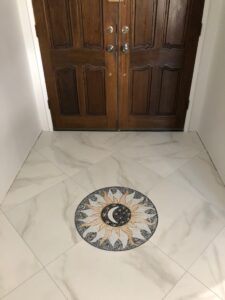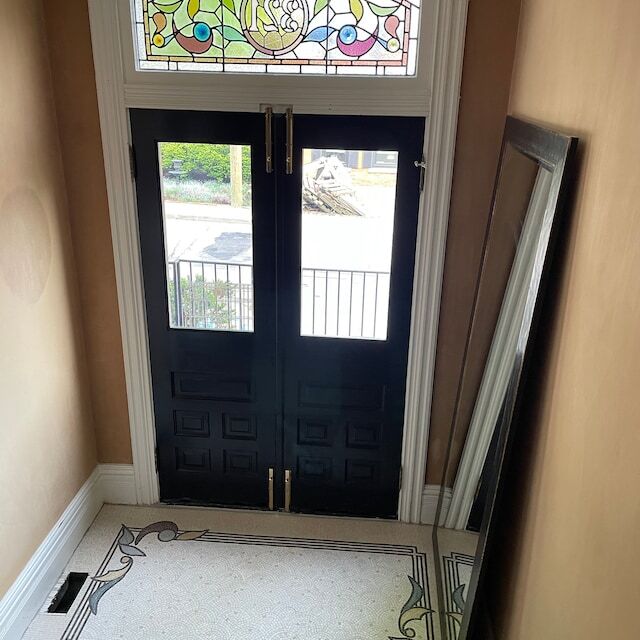
A handmade mosaic asks for very little care, but the little it asks for matters. Stone and glass will outlast almost any other finish in a home if they are cleaned with the right products and sealed when needed. This is the routine we recommend.
Everyday cleaning
- Dust and sweep first. Grit is the main cause of wear on mosaic floors. A soft brush or a vacuum without a beater bar removes it without scratching.
- Use a pH-neutral cleaner. Warm water with a small amount of stone-safe, pH-neutral cleaner is all a mosaic needs. Wipe with a soft cloth or mop, then dry.
- Avoid acids and abrasives. Vinegar, lemon, bleach and many bathroom cleaners can etch marble and weaken grout. Scouring pads can scratch both stone and glass.
Sealing marble
Marble is porous. A penetrating sealer, applied after installation, helps it resist stains from water, oil and wine. How often to reseal depends on use: floors, kitchens and bathrooms need it more often than a wall panel in a living room. A simple test is to drop a little water on the surface; if it darkens the stone instead of beading, it is time to reseal. Always follow the sealer manufacturer’s instructions.
Glass does not need sealing, but the grout around it does benefit from it, especially in showers and pools.
Wet areas and outdoors
- Showers: rinse and squeegee after use to stop soap and mineral build-up.
- Pools and fountains: keep water chemistry balanced; strongly unbalanced water can mark both grout and stone over time.
- Outdoor pieces: clear leaves and soil that hold moisture against the surface, and check grout lines after winter.
Looking after the grout
Grout is the part of a mosaic that works hardest. It fills thousands of small joints, holds the pieces together and keeps water out. Cement grout is porous and benefits from sealing, especially on floors and in bathrooms and kitchens. Epoxy grout is far more resistant to stains and water and is often chosen for pools and showers. Whichever was used, clean grout lines gently with a soft brush and a pH-neutral cleaner; stiff wire brushes and harsh chemicals wear them away faster than anything else.
Products to use, and to avoid
- Use: pH-neutral stone cleaners, mild soap in warm water, soft cloths, soft-bristled brushes, microfibre mops and penetrating stone sealers.
- Avoid on marble: vinegar, lemon, bleach, ammonia, limescale removers and any product described as acidic or descaling.
- Avoid on all mosaics: scouring powders, steel wool, high-pressure washers held close to the surface, and wax-based polishes that can build up and trap dirt.
A simple yearly check
Once a year, take ten minutes to look closely at your mosaic. Check the grout lines for cracks or gaps, look for any loose or chipped tesserae, and do the water test on marble to see if it needs resealing. Outdoors, check after the winter and again before summer. Catching small issues on a yearly walk-round costs almost nothing and keeps the piece looking as it did on the day it was installed.
Care by location
Living rooms and walls. Wall mosaics in dry rooms need very little: a light dusting, an occasional wipe with a damp cloth, and a check of the sealing every few years if they are marble.
Entrances and hallways. These floors see the most grit. A good doormat at each entrance does more for a mosaic floor than any cleaner, because it stops sand being ground into the surface. Sweep or vacuum often, and reseal marble more frequently than elsewhere in the home.
Kitchens. Oil, wine, coffee and citrus are the main risks for a marble backsplash or floor. Wipe spills promptly, especially acidic ones, and keep the surface well sealed.
Bathrooms. Ventilate after showers to reduce moisture and mould in the grout, and avoid descaling products on marble. A squeegee after each use prevents most build-up.
Gardens and patios. Keep drainage clear, lift pots and planters off the surface so water does not collect underneath, and give outdoor pieces a gentle wash at the start of each season.
When to call a professional
Most care is simple enough to do yourself, but some jobs are better left to a stone or tile specialist: deep stains that do not respond to gentle cleaning, etching from acid spills on polished marble, large areas of cracked or missing grout, several loose sections at once, or any sign of water getting behind a mosaic in a shower or pool. A professional can clean, regrout, reseal or reset pieces without damaging the surrounding work, and can often restore a tired floor to look almost new.
Small problems, early
If a tessera loosens or a grout line cracks, deal with it early. A single piece can usually be reset with a little adhesive and new grout; left alone, water gets behind it and the repair grows. Keep a few spare tesserae from your installation if you were given them.
For questions about your own piece, Mozaico’s frequently asked questions page covers care, installation and shipping, and the team can advise on anything specific.